
PHOTO
THE Cold Country Koala Habitat Enhancement Project, designed to support the recovery of the endangered Koala populations and administered by Local Land Services, is approaching its fourth year on the Southern Tablelands.
The Monaro has been found to be home to a unique koala population, mainly located around the Numeralla, Peak View, Jerangle and Bredbo areas.
The project grant falls under the NSW Koala Strategy and supports the protection and enhancement of koala habitat in the Area of Regional Koala Significance (ARKS) between Tinderry and Kybeyan, facilitating land managers to protect existing koala habitat through fencing and weed management, and to increase habitat connectivity through the establishment of biodiversity corridors with koala feed trees.
Local Land Services (LLS) has partnered with Landcare to deliver the funding over a five-year period.
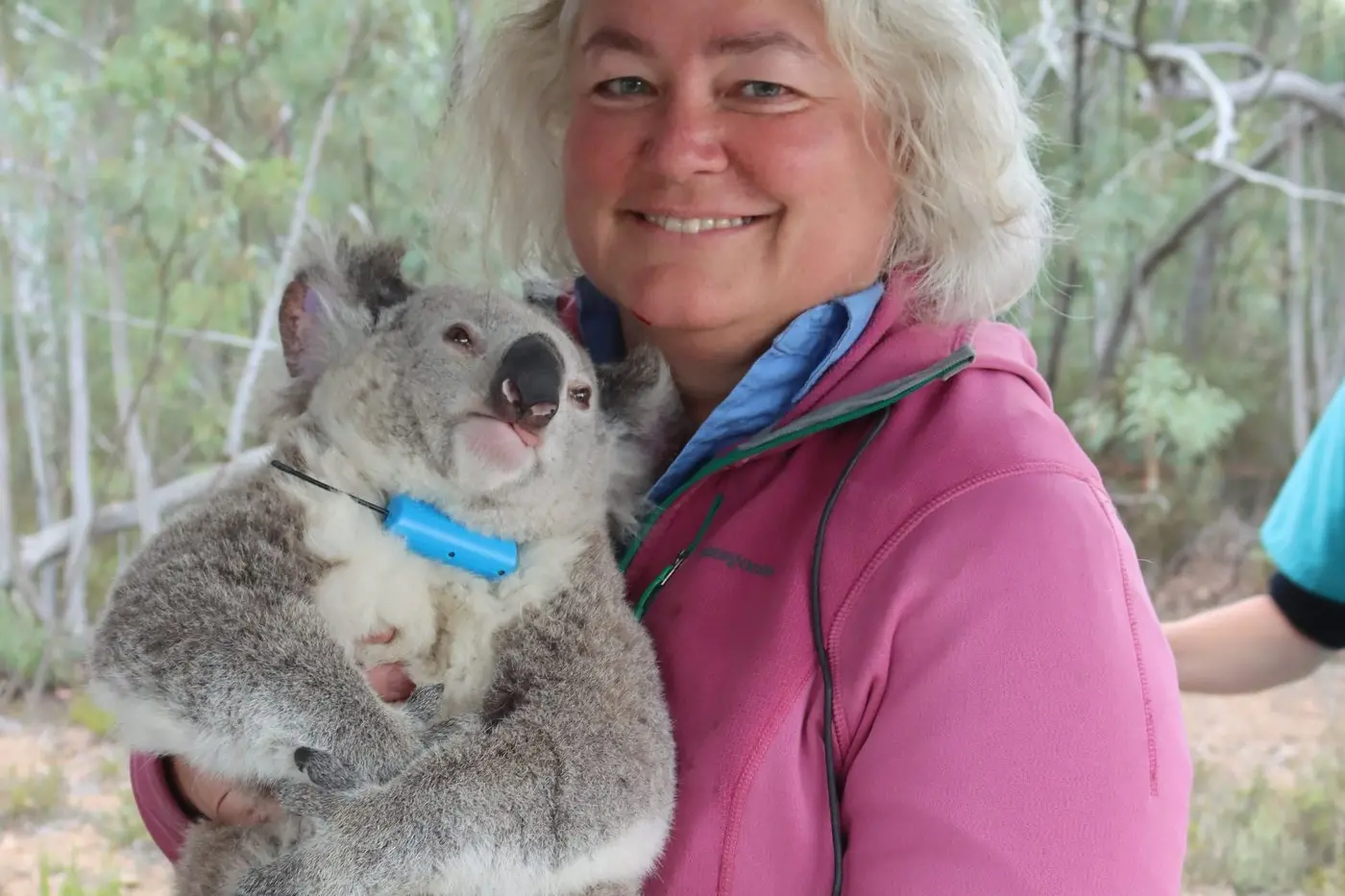
NSW Koala Strategy Regional Partnerships officer – Southern Tablelands, Dr Sally Miller, addressed a Snowy Monaro Regional Council meeting in December to provide a report on the Cold Country Koala project.
"Up until recently this region has been under-surveyed relative to the significance of the koala population here. It was just never considered to be a really big koala stronghold, now it has been confirmed that it is," Dr Miller said.
Historical and recent surveys have shown that this area’s koala population has a local and state-wide significance.
Dr Miller said it is vitally important to protect and enhance koala habitat through on-ground works and to conduct ongoing surveys to learn more about this population and how they can be helped.
"Southern Tablelands ARKS is marked as a priority population for investment. Across the State wherever there are these priority populations a regional delivery officer has been appointed to that region.
"The regional delivery model being used, in addition to a regional partnerships officer, funds an external officer and, for the Southern Tablelands, that is Kirrily Gould from Local Land Services. Kirrily and I work together on delivering the NSW Koala Strategy," Dr Miller said.
"The strategy is supporting local communities to deliver koala conservation actions and our role is to support the community to deliver actions.
"The reason it is called 'Cold Country Koalas' is because Kirrily in her role with LLS was delivering a Commonwealth Bushfire Recovery Grant in this area following the 2019/2020 bushfires, and they called the project Cold Country Koalas.
"We are standing on their shoulders, and on the shoulders of some work done by Chris Allen through NPWS prior to that, and so the name was kept as a continuation of that work in this region.
"In managing this regional partnership between LLS and NSW DCCEEW, we have an advisory committee that supports us and reviews our activities, provides advice and recommendations and asks questions that we perhaps haven't thought of.
"We have a representative from SMRC on that committee and they suggested a council meeting presentation would be a valuable avenue of community engagement.
"As my role is also being part of the community, as well as representing the strategy, I applied to deliver a presentation to council which will hopefully have positive outcomes for the koalas in the region."
The Cold Country Koala habitat enhancement and survey project has already enabled more than 30 landholders to protect and enhance koala habitat in South East NSW, around the Southern Tablelands Area of Regional Koala Significance. This has involved livestock exclusion fencing and/or revegetation planting as well as pest animal and weed control works. The project has also included a citizen science led audio 'Koala Karaoke’ survey - using a small monitor to record male koalas during breeding season - which showed that the koala population in much of this area is going well despite being impacted by the 2019/2020 bushfires.
"We don't really know what the impact of the fires had on the koalas; we know a considerable amount of koala habitat was impacted and there were a number of koalas taken into care as a result of the fires, with mostly poor condition," Dr Miller said.
"I don't think there were many that were cared for suffering from burn injuries - for most of them their habitat was burnt, and they had managed to make their way through an extraordinary drought period before the fires, and were in fairly poor condition. These koalas were re-habilitated and then released back into the wild.
"We are still obviously facing the impact of the fires, where some of the habitat has been intensely impacted. I was at a property not long ago that was very hotly burnt, and there is not much in the way of habitat that has come back yet. So we will be dealing with the impact of that fire, in terms of koala habitat, for years to come.
"It's a slow recovery," Dr Miller said.
The Cold Country Koala project has support from local volunteers, who play a major role in implementing some of the project activities.
"There are many organisations working with us," Dr Miller said.
"Along with the LLS, we have an informal partnership with the Upper Murrumbidgee Landcare Group and Upper Snowy Landcare Group. The co-ordinators in place at the time we started the project work very closely with Kirrily and myself to deliver a lot of these actions, and they have access to volunteers. LAOKO volunteers also assist us with some of our activities.
"Some of these are funding landholders to do work on their own properties, some are providing activities, survey and monitoring research and in some circumstances we use volunteers for this as well.
"We are always keen to get reports from community members, land holders, anyone driving through, if they see a koala. There is an I Spy Koala app that will allow you to easily report this. It goes into a database and those reports are really valuable to us.
"Kirrily or myself are happy to take phone calls or reports from local landholders if they are curious about what they may have on their property - if they have heard what might be koala calls on their land. We are able to support landholders in exploring that.
"In the presentation to SMRC I used Avonside as a case study of the work we are doing in terms of surveying, monitoring and habitat restoration and pest control.
It also provides an awareness of some of the threats koalas face, such as vehicle strike, dog attack and fire, as well as disease.
"As the landscape is being broken up into small blocks, people having dogs and lots of vehicle movement, it increases the threat level for koalas - so we just ask people to be mindful of that and if they are looking for opportunities to minimise the impact on koalas while managing their land, we have a whole range of different activities landholders can do. It can be something as simple as reporting a koala.
"One of the things we are talking a lot about at the moment is controlling weeds, particularly African lovegrass (ALG).
"ALG burns very hot, and if fire does get into the landscape again, and it hits ALG it will move much faster and hotter and will create much more of a threat for koalas and other wildlife as well as community life and property.
"So, controlling weeds is very beneficial for koalas and will make a big difference as will controlling feral grazing herbivores - you can report feral species using the Feral Scan app, which helps land management groups such as the LLS to coordinate control programs."
Dr Miller is passionate about koalas. She studied a PhD in koala ecology and has worked in NSW National Parks and Wildlife Service and NSW Environment and Heritage Saving Our Species program.
"I love koalas, I find them immensely interesting," she said.
"They have become really political - but that's not their fault - they are just out there doing their thing."
To report any sightings of koalas or to find out more about the NSW Koala Strategy and the Cold Country Koala Habitat Enhancement project contact Dr Miller on 0400 496 153 or Kirrily Gould, co-ordinator of the Cold Country Koalas Habitat Enhancement project South East LLS on 0429 692 550.